Some of the best bits of Harrogate aren't the places everyone tells you to visit.
They're the doorway you didn't look through. The path you assumed went nowhere. The little building you've passed a hundred times without knowing why it's there.
Harrogate rewards a bit of nosiness.
So forget the obvious attractions for a moment. Here are ten places, details and corners of Harrogate that are very easy to miss.
1. The Japanese Garden hiding inside Valley Gardens
Most people visiting Valley Gardens follow the main paths, admire the flowerbeds and eventually head towards the café or playground.
Take a slight detour and you'll find something rather different.
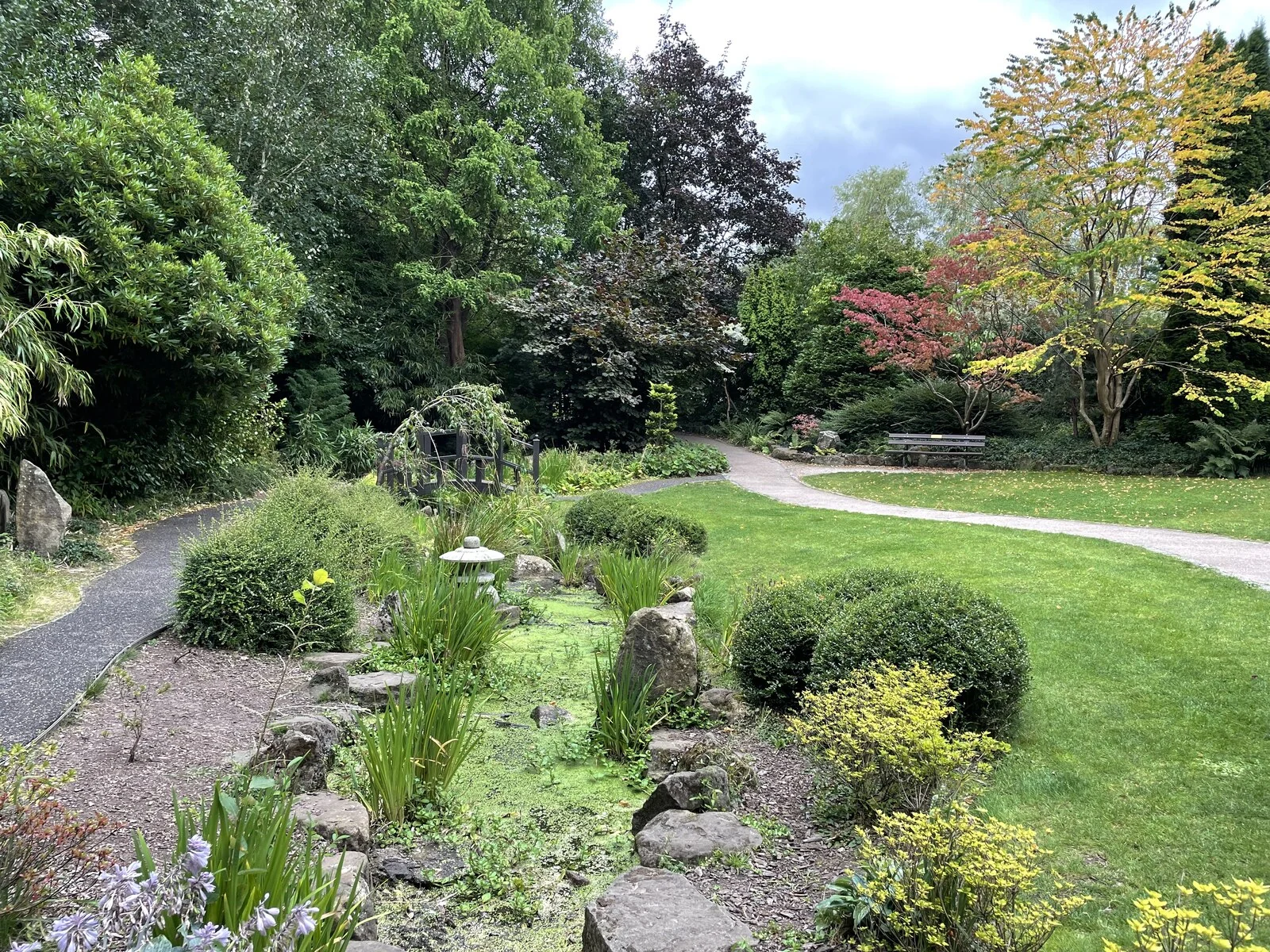
Harrogate's Japanese Garden dates back to the early 1930s. Over the following decades much of its original character disappeared, before a major restoration brought it back to life in 2017.
Today it's a small stroll garden of paths, water, planting, bridges and Japanese-inspired features.
It's not enormous.
That's part of its appeal.
It feels like a garden hidden inside another garden.
LOOK OUT FOR
The bridges · Water features · Japanese planting · A quieter corner of Valley Gardens
2. Tewit Well
The Stray / High Harrogate
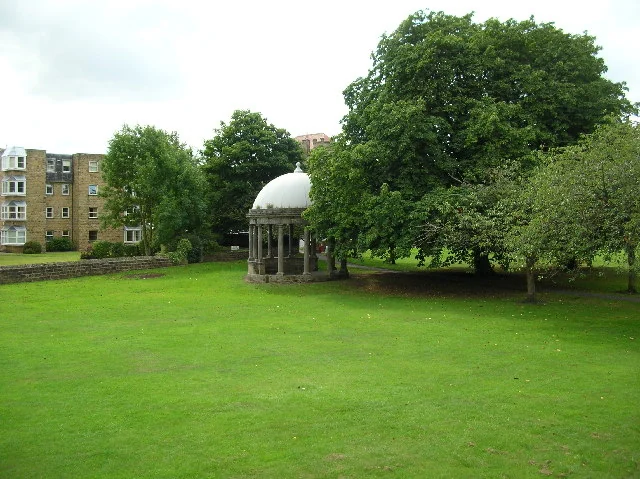
Thousands of people drive past this little domed structure without giving it much thought.
Yet this is essentially where the Harrogate story begins.
Tewit Well is regarded as Harrogate's oldest known mineral spring and is associated with William Slingsby's discovery of the town's spa waters in the late 16th century.
That discovery eventually transformed a small Yorkshire settlement into one of Britain's great spa towns.
The structure standing here has its own story too. An earlier cover from the sulphur well in Low Harrogate was eventually moved to Tewit Well.
It's an extraordinarily important little piece of Harrogate history sitting quietly beside The Stray.
LOOK OUT FOR
The domed well cover · Heritage plaque · The contrast with the surrounding open Stray
3. Westminster Arcade
Just off Parliament Street
Parliament Street is one of the busiest parts of Harrogate.
Which makes it surprisingly easy to miss what's just off it.
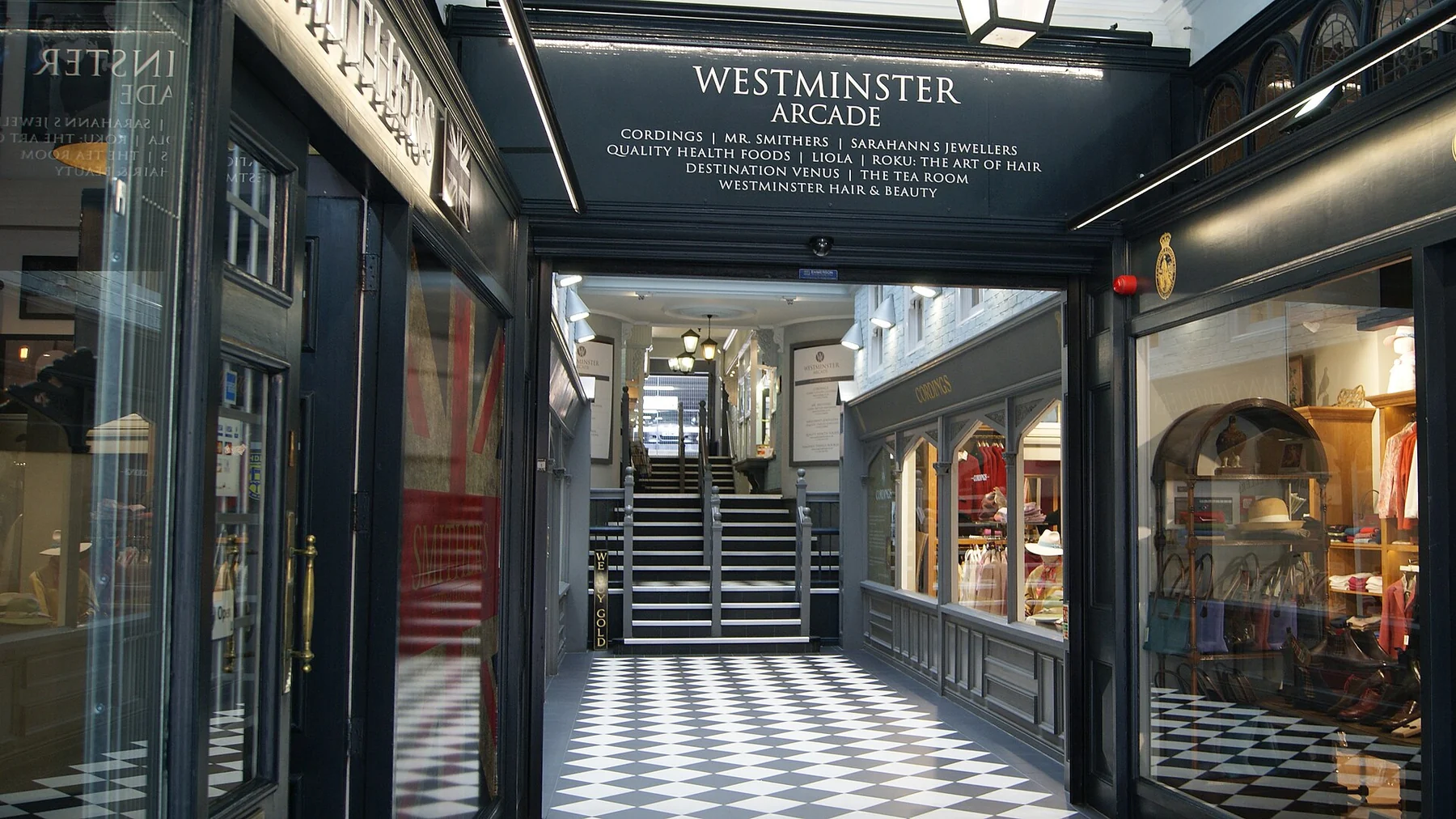
Westminster Arcade is a small Victorian shopping arcade dating from the late 19th century.
Walk inside and the atmosphere changes almost immediately.
It's a glimpse of a different Harrogate: smaller-scale, architectural and slightly tucked away from the main shopping streets.
You won't need an hour here.
You might only need five minutes.
But that's rather the point of this guide.
LOOK OUT FOR
Victorian architecture · Independent businesses · The entrance you may have walked past before
4. Bogs Field isn't just a nice bit of Valley Gardens
Valley Gardens
This is one of our favourite Harrogate facts.
The attractive lawns and gardens around Bogs Field sit above something much stranger.
Harrogate developed because of its mineral waters, and 36 of the town's approximately 100 mineral wells are found within Valley Gardens.
The waters aren't all the same either.
Different springs contain different mineral compositions, which was enormously important when Harrogate was operating as a spa resort.
So when you're wandering through this beautiful piece of parkland, remember that underneath your feet is one of the things that made Harrogate famous.
LOOK OUT FOR
Historic well heads · Magnesia Well Pump Room · Signs of Harrogate's spa past
5. The Pinewoods begin where many people turn around
Beyond Valley Gardens
Walk to the top of Valley Gardens and it's tempting to decide you've reached the end.
You haven't.
Keep going and the formal gardens begin to give way to The Pinewoods, a substantial area of woodland stretching towards RHS Garden Harlow Carr.
Suddenly Harrogate feels very different.
There are woodland paths, mature trees and routes that eventually connect with Harlow Carr, Birk Crag and the countryside beyond.
It's entirely possible to start among the flowerbeds of Valley Gardens and, not much later, feel as though you've left town altogether.
LOCAL TIP
Next time you visit Valley Gardens, don't turn around at the top. Keep walking.
6. Birk Crag
West of Harrogate
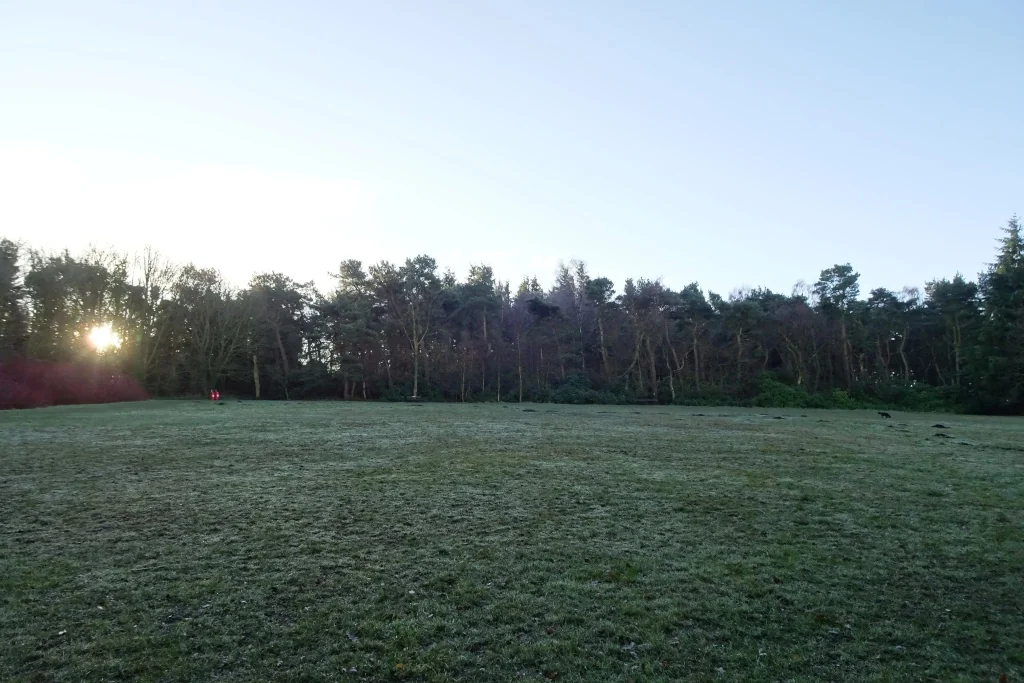
Go further again and you'll find Birk Crag.
This is one of those places plenty of Harrogate residents know but relatively few visitors would ever think to search for.
The woodland covers around 26 acres, with paths climbing through the trees, a stream lower down and rocky ground higher up.
Combined with the Pinewoods, it creates a much wilder side to Harrogate than the manicured image of the town might suggest.
And you can incorporate it into a much longer circular walk from central Harrogate.
GOOD FOR
Woodland walks · Dogs · Families · Getting muddy · Escaping town without going very far
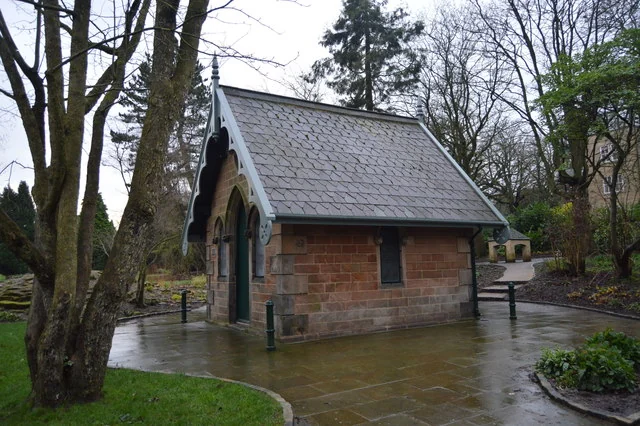
7. The Magnesia Well Pump Room
Valley Gardens
It's easy to admire this little Gothic building and carry on walking.
But it's another surviving piece of the machinery behind Harrogate's rise as a spa.
The Magnesia Well Pump Room was built in 1858 over one of the town's mineral springs.
Visitors came to Harrogate specifically to drink different waters that were believed to have different medicinal properties.
Today the idea of travelling somewhere to drink mineral water from a well might sound rather strange.
For Victorian Harrogate, it was big business.
The hotels, gardens, baths and grand architecture that followed owe a great deal to these springs.
LOOK OUT FOR
The Gothic architecture · Historic well heads nearby · The connection between the building and the landscape around it
8. Crown Place and the great Harrogate water scandal
Beside the Royal Pump Room
Now this is the sort of Harrogate story we like.
In 1835, Joseph Thackwray, owner of the Crown Hotel, was accused of attempting to divert water from Harrogate's public sulphur spring for private use.
The scheme was discovered and caused a considerable local outcry.
It wasn't simply an argument between businessmen.
The dispute helped trigger demands for better protection of Harrogate's mineral springs and ultimately contributed to the creation of a local authority through the Harrogate Improvement Act of 1841.
There's a plaque at Crown Place recording what happened.
Walk past today and you'd have absolutely no idea that a battle over sulphur water helped shape the way Harrogate was governed.
LOOK OUT FOR
The heritage plaque on Crown Place opposite the Royal Pump Room
9. Follow the spa town into the woods
Valley Gardens → Pinewoods → Birk Crag
This one isn't really a place.
It's a route.
And it completely changes how you understand Harrogate.
Start around the Royal Pump Room and Valley Gardens, surrounded by the architecture and landscape of the old spa resort.
Walk through the gardens.
Continue into the Pinewoods.
Then keep going towards Birk Crag.
The formal spa town gradually disappears and is replaced by woodland, streams, rougher paths and countryside.
There's a circular route of roughly 3.6 miles linking parts of this landscape.
It's one of the best examples of how close Harrogate sits to genuinely good walking country.
GOOD FOR
A couple of hours · Walking · Seeing another side of Harrogate · Leaving the car behind
10. Read the walls
All over Harrogate
Here's something you can do almost anywhere in town.
Look for the plaques.
Harrogate has an extensive collection of heritage plaques attached to buildings and landmarks across the town.
There are currently close to 100 of them.
Collectively, they tell stories about hotels, wells, notable residents, historic buildings and events that shaped Harrogate.
Some explain buildings you've probably walked past for years without thinking twice about them.
You don't need to follow an organised trail.
Just start noticing them.
Once you do, Harrogate becomes considerably more interesting.
LOCAL CHALLENGE
Next time you walk through town, find three plaques you've never read before.
Harrogate is better when you look twice
The big attractions matter.
RHS Garden Harlow Carr, Bettys, the Turkish Baths and Valley Gardens are famous for good reason.
But they're only part of Harrogate.
There's another version of the town hidden in woodland paths, old wells, plaques, gardens and bits of architecture that don't necessarily make it onto a visitor's itinerary.
And that's something we're going to explore much more on Harrogate.co.uk.
Because sometimes the interesting bit isn't where everyone else is looking.
It's the thing you nearly walked straight past.
For the better-known side of town, start with our complete guide to things to do in Harrogate — and if you're after somewhere to sit down afterwards, try one of Harrogate’s best coffee shops.
Places in this guide
Recommendations here are editorial. Where a place is a paying partner it is labelled. Advertising disclosure.